
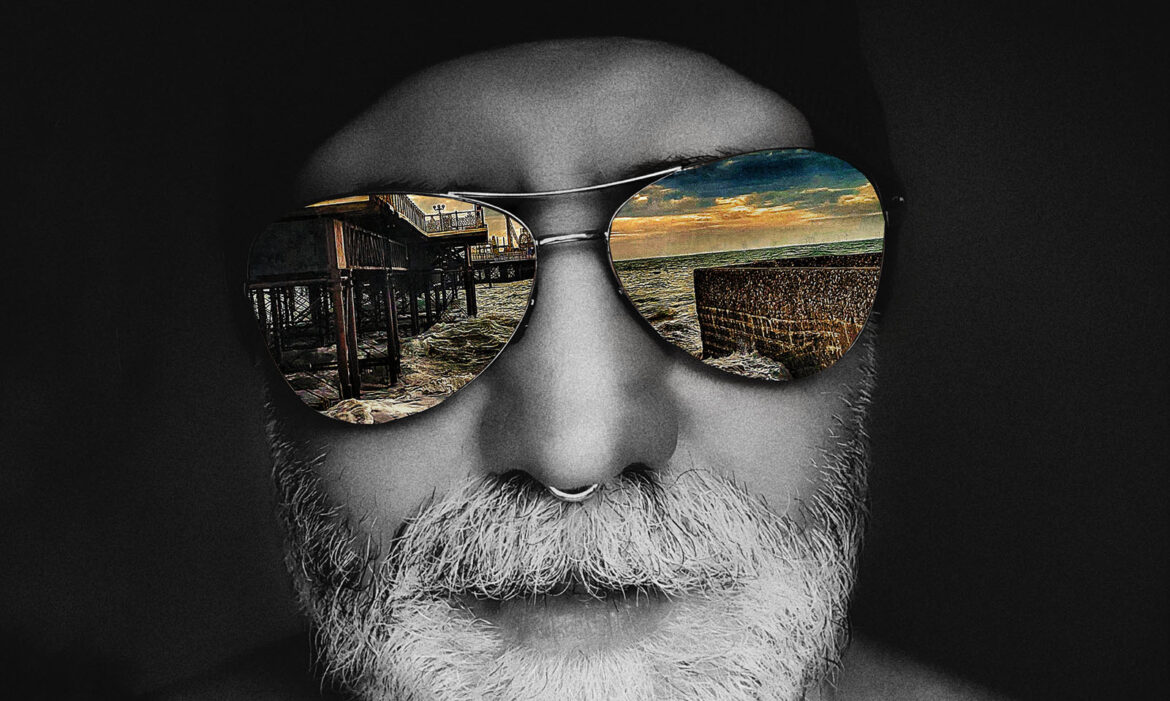
Brian Roe is a contemporary photographic artist creating limited-edition fine art photography prints inspired by landscape, architecture, atmosphere and the emotional relationship between light and place.
The Rhythm of Light: An Interview with Brian Roe
Contemporary Photographic Artist, Former Professional Musician, and Digital Pioneer
Behind every photograph lies a story. In the case of contemporary photographic artist Brian Roe, the
story stretches across four decades of artistic exploration, from the punk rock stages of the 1980s to the quiet stillness of dawn landscapes, from traditional art education to the cutting edge of digital creativity.
In this exclusive interview, Pixel Gallery explores the experiences, influences and philosophy that have shaped Brian Roe’s distinctive body of photographic work.
From Fine Art Student to Punk Rock Pioneer
Pixel Gallery: Most people know you today for your ethereal and atmospheric photography. What they may not realise is that your artistic eye was forged through decades of immersion in music, art and technology. How did that journey begin?
Brian Roe: If I had to summarise it, I’d say I’m a student of the Old Masters who got temporarily distracted by a drum kit and a punk rock revolution.
I moved from the structured environment of art education into the wonderfully chaotic world of touring as a teenage drummer. Later, I embraced the emerging world of digital technology, becoming involved in web design and interactive media during the early years of the internet.
Looking back, the excitement I feel when creating a new photographic composition today is remarkably similar to the excitement I felt stepping onto a stage at seventeen years old. The medium has changed, but the creative energy remains exactly the same.
The Varukers and the Birth of D-Beat
Pixel Gallery: Let’s talk about that teenage drummer.
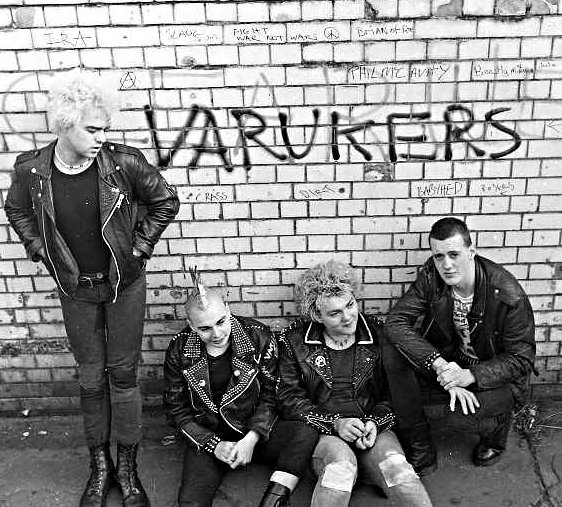
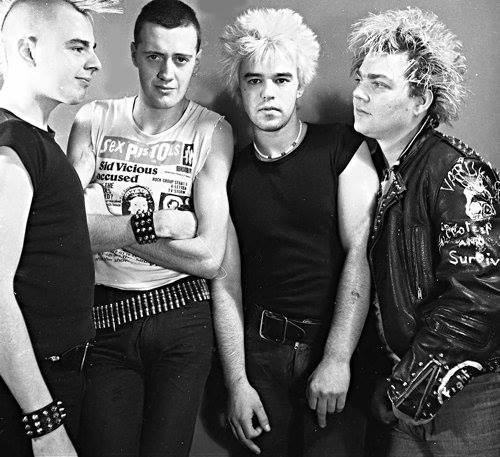
Brian Roe: It was an extraordinary period of my life. Straight out of school in Royal Leamington Spa, I joined The Varukers, one of the pioneering bands of the UK hardcore punk movement.
At the time we weren’t simply performing music; we were helping shape a genre. Between touring and recording, we achieved three Indie Top 5 singles, while our debut album Bloodsuckers reached Number One in the independent charts.
The Varukers would go on to become recognised internationally as one of the defining hardcore punk bands of the 1980s, helping establish the influential D-beat style of drumming that remains an important part of punk music today.
Brighton, Touring and Life on the Road
Brian Roe: In 1987 I moved to Brighton. During the day I sold sunglasses on Brighton Palace Pier. In the evenings I played drums and toured extensively.
Over the years I worked with and supported a variety of bands including Transvision Vamp, New Model Army, Sunshot, the original line-up of Kula Shaker and, later, the legendary punk band X-Ray Spex.
Touring was an incredible education. You learn resilience, discipline and how to perform under pressure. Those experiences continue to influence my work as an artist today.
Although I look back on those years with affection, I suspect my liver is considerably happier with my current lifestyle.
Art School, Photography and Classical Foundations
Pixel Gallery: While all of this was happening, you were also studying art.
Brian Roe: Yes. During breaks from touring, I studied photography through a youth training programme where I learnt the fundamentals of traditional photography: developing negatives, working in the darkroom and producing enlargements by hand.
Later, I attended art college where I studied Fine Art, History of Art and Ceramic Design.
That classical training gave me something invaluable: an understanding that technology should serve creativity, not replace it.
Whether I am working with a camera, Photoshop or artificial intelligence, the fundamental principles remain unchanged.
Composition remains composition.
Light remains light.
Emotion remains emotion.
The Influence of Joe Teti
Brian Roe: One of the most influential figures in my creative development was Joe Teti.
Joe was a fellow drummer, mentor and educator who guided me between the ages of seventeen and twenty.
He introduced me to the principles that underpin great art: form, mass, texture, balance, visual containment and the Golden Ratio.
Much of what I create today can be traced back to lessons learned during those years. While my tools have evolved dramatically, the artistic foundations remain rooted in classical principles.
What Is Art?
Pixel Gallery: How do you define art?
Brian Roe: Art is the manifestation of emotional and spiritual experience.
Throughout my life, I have been fascinated by the relationship between the external world and our internal response to it.
After my years as a professional musician, I spent extended periods living and travelling in Bali, India and Sri Lanka. Immersing myself in those cultures broadened my perspective enormously and deepened my appreciation of spirituality, symbolism and human connection.
Many of those influences continue to find their way into my work.
Sustainability, Place and Responsibility
Pixel Gallery: How have the places you’ve lived and visited shaped your photography?
Brian Roe: Place is everything.
As young punk musicians, many of us were already questioning environmental issues long before they became mainstream concerns.
I’ve witnessed extraordinary beauty around the world, but I’ve also seen that beauty damaged through neglect and pollution.
Photography has the ability to celebrate what is precious and remind us what we stand to lose.
For me, sustainability isn’t a trend. It’s a responsibility.
Creating Emotional Connection
Pixel Gallery: How would you describe your work to someone seeing it for the first time?
Brian Roe: Every image begins with an emotional connection.
Each composition carries a story and a personal significance. My aim is to capture a feeling and share it with others.
The finished photograph is simply the vehicle.
What I’m really trying to communicate is the atmosphere, energy and emotion I experienced in that moment.
If the viewer feels even a fraction of what I felt while creating the image, then the work has succeeded.
The Digital Surrealist
Pixel Gallery: Technology has transformed the creative industries over the last twenty years. How do you view that change?
Brian Roe: Technology has given artists extraordinary freedom.
I often think about Salvador Dalí when this subject comes up. In many ways, Dalí was the original Photoshop artist.
Had he possessed today’s tools, I suspect he would have embraced them enthusiastically while continuing to create masterpieces such as The Persistence of Memory.
Technology doesn’t create great art.
People create great art.
Technology simply expands the range of possibilities available to them.
Finding Focus in the Quiet Hours
Pixel Gallery: Do you have a daily creative routine?
Brian Roe: I wake early, usually between five and six in the morning.
My day begins with a strong cup of Lavazza coffee and several uninterrupted hours of focused creative work.
The early morning offers something increasingly rare in modern life: silence.
There are no distractions, no interruptions and very little noise.
It’s often during those quiet hours that new ideas emerge.
A good night’s sleep remains one of the most powerful creative tools I know.
Looking Beyond the Horizon
Pixel Gallery: If you could experience life through the eyes of anyone else in history, who would you choose?
Brian Roe: Captain Cook.
What fascinates me is the spirit of exploration.
He set out into the unknown with little more than a ship, a crew, a telescope and a map.
That sense of curiosity resonates deeply with me.
In many ways, photography is a form of exploration. My camera and motorcycle allow me to pursue that same desire to discover new places and experience the world from fresh perspectives.
A Few Final Questions
Pixel Gallery: What are people most surprised to discover about you?
Brian Roe: Usually that I was the drummer who helped establish the D-beat style through my work with The Varukers, or that I played with the original line-up of Kula Shaker before the band achieved mainstream success.
Pixel Gallery: Is there one book you would recommend?
Brian Roe: Awaken the Giant Within by Tony Robbins.
It helped me recalibrate many areas of my life. Musicians will understand when I say it acted like a graphic equaliser for my thinking.
About Brian Roe
Brian Roe is a contemporary photographic artist creating limited-edition fine art photography prints inspired by landscape, architecture, atmosphere and the emotional relationship between light and place.
His creative journey spans fine art education, international touring as a professional musician, decades of digital innovation and extensive travel throughout Asia and Europe.
Today, his work explores the quiet space between stillness and light, transforming photography into atmospheric visual narratives that invite reflection, imagination and emotional connection.
This interview was conducted by Pixel Gallery and reproduced with permission.
Brian Roe is a contemporary photographic artist creating limited-edition fine art photography prints from his studio in Royal Leamington Spa, Warwickshire.