
Why New Tools Never Kill Old Souls
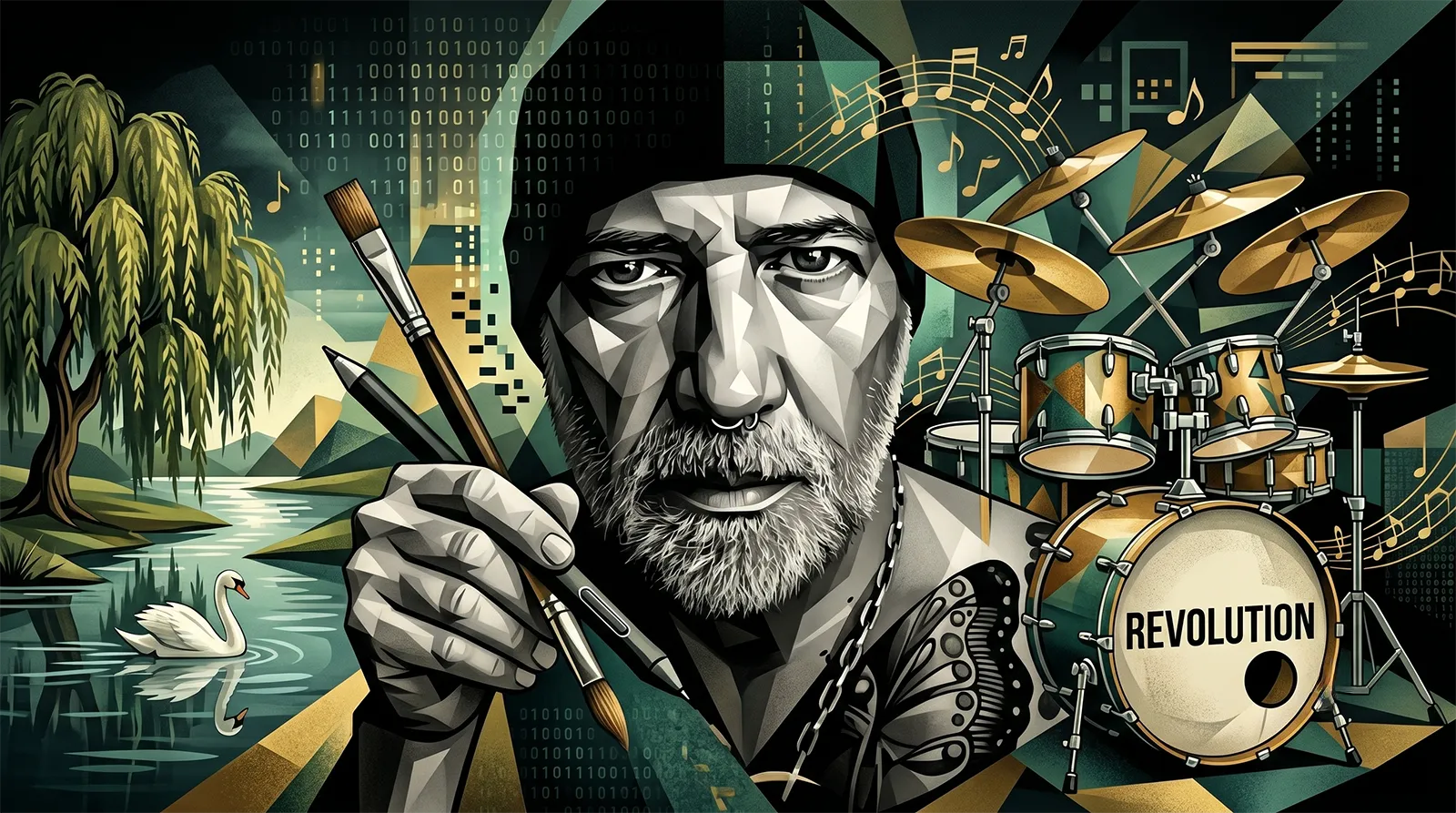
The Evolution of the Canvas: Why New Technology Never Kills Art
Every time humanity invents a new way to create, the gatekeepers of culture go into an absolute panic.
Right now, the art world is up in arms about the rise of modern digital tools, complex software, and Artificial Intelligence. If you listen to the loudest voices in the galleries, they’ll tell you that the machines are coming to strip the soul out of creativity, that algorithms are replacing artists, and that true craftsmanship is dead. They treat tech like a terminal illness.
Personally? I think they’re terrified of change.
When I sit in my studio at dawn, I don’t feel diminished by modern technology. I don’t feel less creative. I feel an intoxicating explosion of new possibilities.
The 19th-Century Panic
To understand why people are so frightened today, you only have to look back at the late 19th century. When the first commercial cameras emerged, traditional oil painters were absolutely furious. They claimed that a mechanical box capturing light with chemistry was a soulless, cheap shortcut. They argued that it wasn’t “real” art because the machine did the heavy lifting.
But history proved them completely wrong. The camera didn’t kill painting; it liberated it.
Once painters were freed from the tedious chore of accurately documenting reality for portraits and landscapes, they were forced to innovate. The camera gave birth to Impressionism, Surrealism, and Abstract art. It forced artists to paint how a moment felt, rather than just how it looked. The tool changed, the perspective shifted, and the art world exploded into its most vibrant era.
Decades later, the same battle was fought when digital photography began to overtake film and the darkroom. The traditionalists wept for the loss of chemical negatives, claiming digital sensors lacked “warmth” and “soul.” Today, nobody questions the artistic validity of a digital lens. We embraced the evolution, and we loved the results.
The Ghost in the Drum Machine
We see the exact same pattern in the history of music. The journey from classical orchestral arrangements and acoustic pianos to the electric guitar was met with horror by the traditional establishment. Jazz was called noise. Rock and roll was called a threat to culture.
And then came the 1980s, the era of the synthesiser and the electronic drum machine.
As a young punk drummer, I remember the anxiety surrounding those little plastic boxes with their programmed rhythms. The headlines screamed that the drum machine would make human drummers obsolete. But it didn’t.
Instead, the drum machine forced us to evolve. It birthed entirely new genres of electronic music, synth-pop, and hip-hop. It didn’t replace human groove; it became a collaborator. Drummers didn’t vanish—we just learned to play with the machine, absorbing its mathematical precision into our own physical energy. The human spirit simply adapted to the new canvas.
More Possibilities, Not Less
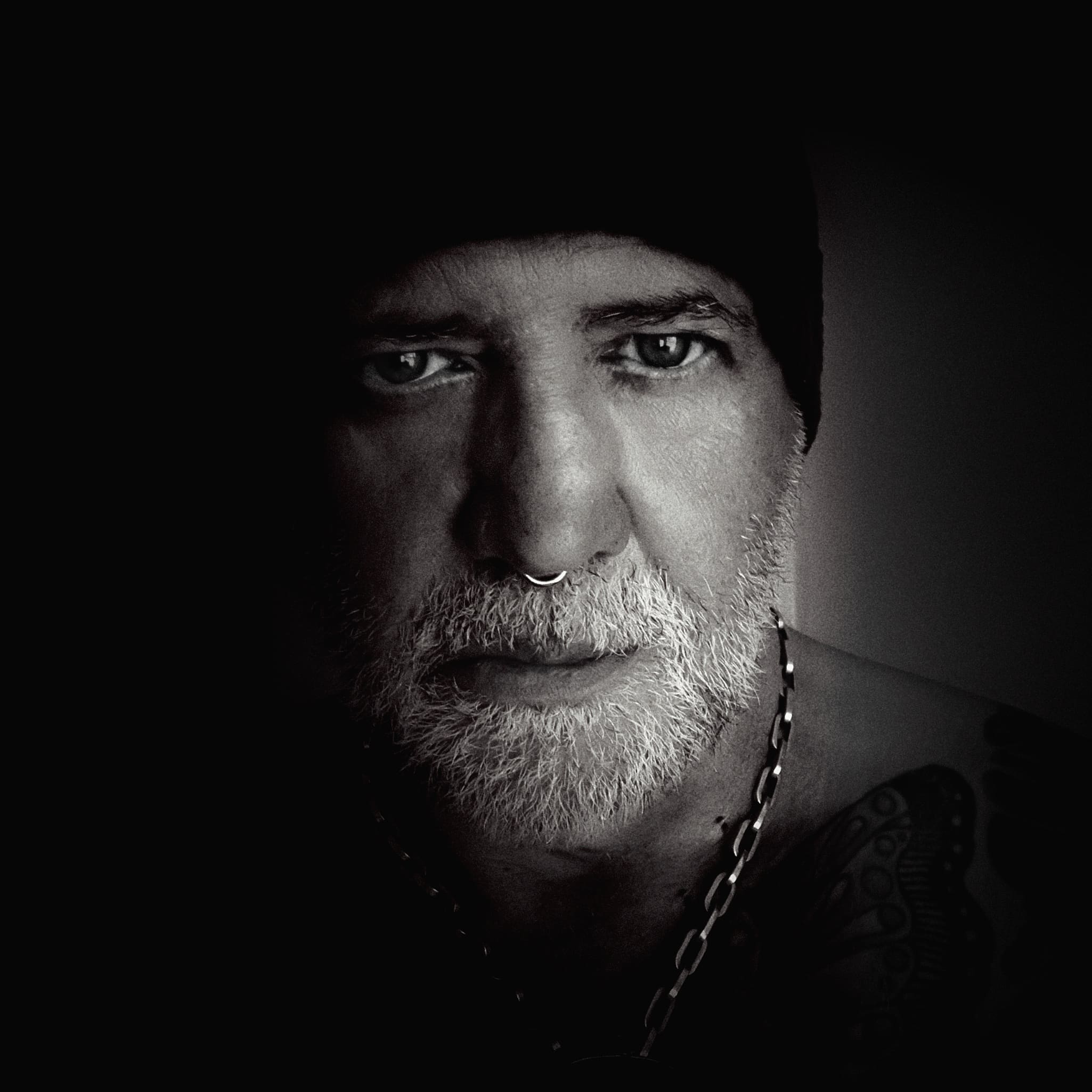
I cut my teeth classically. At art college, I learnt how to stretch canvases, mix oil paints, and sculpt raw clay with my bare hands. I know the physical weight of traditional mediums.
But today, my canvas is digital, and my brushes are found in Photoshop. Does that make the hours I spend composing an image any less spiritual? Does it mean the emotional resonance of a finished print is artificial? Not a chance.
Whether you are using a chisel, an oil brush, a camera lens, or an AI prompt, the tool is completely neutral. A computer cannot feel joy. An algorithm cannot experience the grief of a shared memory, the awe of a Brighton sunset, or the working-class struggle of a lifetime. The machine has no gut instinct. It has no soul to pour into the work.
Modern inventions don’t replace the artist; they expand the horizon. They give those of us with stories to tell a larger, faster, more versatile vocabulary.
I’m not interested in hiding from the future or romanticising the limitations of the past. I am using every single cutting-edge tool available to bring my creative vision to life. The tools will keep evolving, people will keep panicking, but the human need to connect through art will always remain completely untouchable.
Comments are closed.